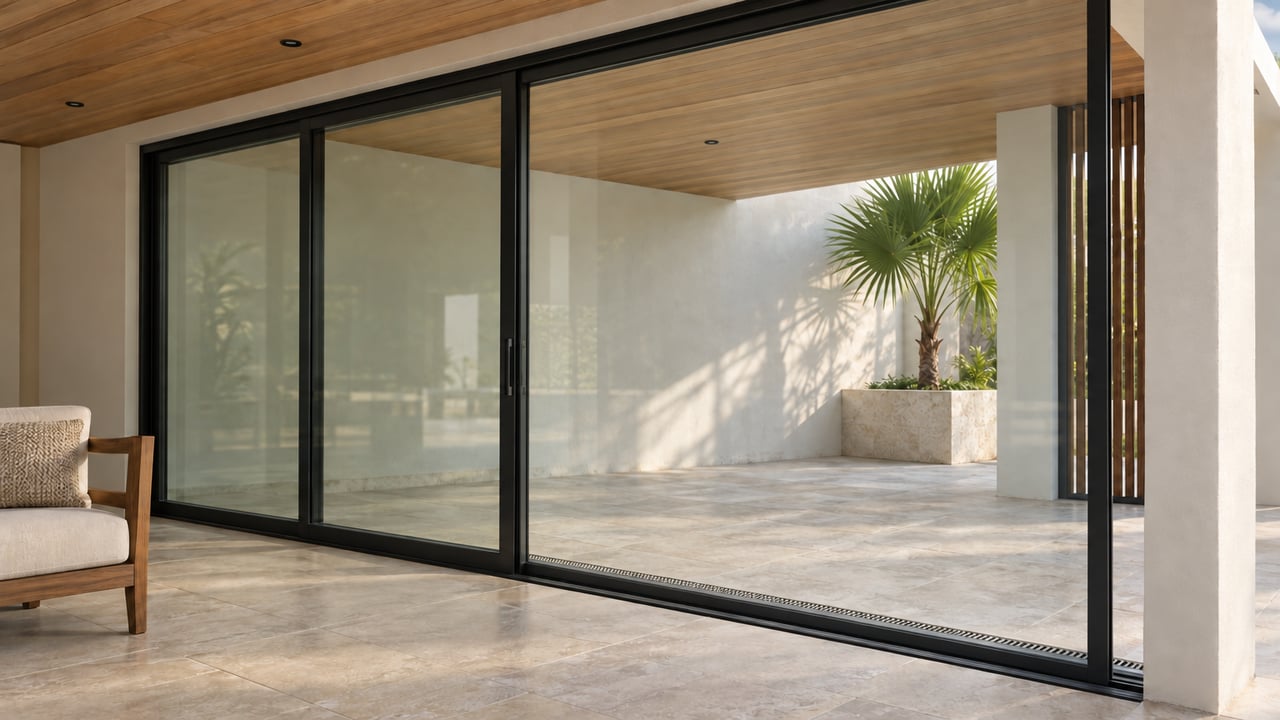
The Lab at Playa Blanca: What Actually Opened on Puntacana Resort's Beach This Year
October 1, 2026
October 1, 2026
"That work did not begin with this building."
Jake Kheel, vice president of Fundación Puntacana, said this on Earth Day 2026, standing in front of the newest structure on Playa Blanca. He was right to downplay the ribbon cutting. The Foundation has run a coral nursery on this coast since 2004 and has tracked hawksbill turtles nesting on these same beaches every year since 2010. What changed on April 22, 2026 was not the mission. It was the scale, the tools available to carry it out, and the fact that this particular stretch of sand is now doing work that used to be spread across a dozen smaller, disconnected efforts.
The building is called the Marine Innovation Center, and if you own or stay along Playa Blanca, it sits close enough to Tortuga Bay and the Westin Puntacana Resort & Club that you have likely already walked past it. What it does is worth understanding, because it changes what that beach is for.
The Marine Innovation Center is not a standalone nature center attached to a resort for goodwill. It is the anchor institution of the Dominican Republic's Marine Innovation Hub, a national platform that runs on exactly two facilities: this one at Playa Blanca, and a Fundación Dominicana de Estudios Marinos (FUNDEMAR) laboratory in Bayahíbe, about an hour down the coast. Between those two buildings sits the country's applied research capacity for reef restoration at scale, supported by Oceankind and coordinated with The Nature Conservancy.
The inauguration drew people who do not typically show up for a resort amenity opening. Armando Paíno Henríquez, the Dominican Republic's Minister of Environment and Natural Resources, attended. So did Rob Brumbaugh, The Nature Conservancy's executive director for the Caribbean, who framed the moment as a shift away from small isolated projects toward restoration that can actually keep pace with reef loss. That framing matters here specifically, because Playa Blanca is now one of the two places in the country where that shift is supposed to happen.
Inside, the specifics are concrete rather than aspirational. The lab holds 32 tanks, with room built in to expand to 64. That number is not decorative. Traditional coral gardening in the Caribbean has depended on cutting fragments from wild colonies that are already declining, which means the old method quietly worked against itself. The new center is built around tools that sidestep that problem: machine learning for monitoring coral health, molecular biology to catch disease before it spreads, and sexual reproduction techniques that let scientists breed more resilient coral rather than just cloning what is already struggling. The lab connects directly to an adjacent marine sanctuary, so researchers can move between controlled tanks and the open reef without much lag between an idea and a field test.
None of this appeared out of nowhere. Fundación Puntacana has monitored hawksbill turtle nesting on Puntacana Resort's beaches every year since 2010, walking the sand at dawn during nesting season to log activity and protect nests before development or foot traffic disturbs them. That is a fifteen year run of fieldwork that happened quietly, without a building attached to it, using volunteers and biologists working off a clipboard and a stretch of coastline that guests and owners walked across every day without necessarily knowing what was being tracked underfoot.
The Marine Innovation Center formalizes that work rather than replacing it. The same sanctuary the Foundation has managed since a 2009 designation by the Ministry of Environment, co-managed since 2018 in partnership with the government, now has a physical home with lab capacity attached to it. The sanctuary itself is not small. It holds more than 60 species of macroalgae, 75 species of hard and soft coral, and over 100 species of tropical fish and mollusks. The Marine Innovation Center now gives the Foundation's work in that sanctuary a dedicated home on Playa Blanca.
The scientific mission is one thing. The part that changes what a resident or owner can do this season is the permanent interactive exhibition the Foundation said would open to the public in the summer following the April inauguration. That timeline puts the exhibit's opening squarely behind us by now. The stated purpose is straightforward: let resort visitors and the surrounding community see, up close, what reef loss actually looks like and what the proposed fixes are, rather than reading about it somewhere else.
That is a different kind of amenity than a new restaurant or a redesigned pool deck, and it sits alongside other changes that have reshaped Puntacana Resort & Club this year. Tortuga Bay went through an interior renovation led by designer Jorge Brown Cott that reinterpreted Oscar de la Renta's original design work through a more contemporary Caribbean lens, a project that earned the property Condé Nast Traveler's Triple Crown recognition in June. The Puntacana Polo Club expanded its footprint. None of those projects, though, changed what the beach itself is doing. The Marine Innovation Center did.
Walk the sand in front of Tortuga Bay this fall and the newest building on that shoreline is not selling anything to anyone. It is counting coral tanks that could double from 32 to 64, logging turtle nests on a beach that has been tracked every year since 2010, and reporting into a national hub that did not exist twelve months ago. That is the actual story of what opened at Playa Blanca in 2026, and it has very little to do with tourism.
Puntacana Resort & Club keeps adding to its story in ways that go beyond what shows up in a listing description, and a new coral lab on Playa Blanca is a good example. Auburn Lucas follows changes like this as closely as we follow the market itself. Reach out if you want to know what else is shaping this stretch of coast.
Stay up to date on the latest real estate trends.
We pride ourselves in providing personalized solutions that bring our clients closer to their dream properties and enhance their long-term wealth.
Your Dominican Republic Connection
Contact Us
Centro Corporativo Capital Segundo Piso
Calle Altagracia La Romana Dominican Republic 22000