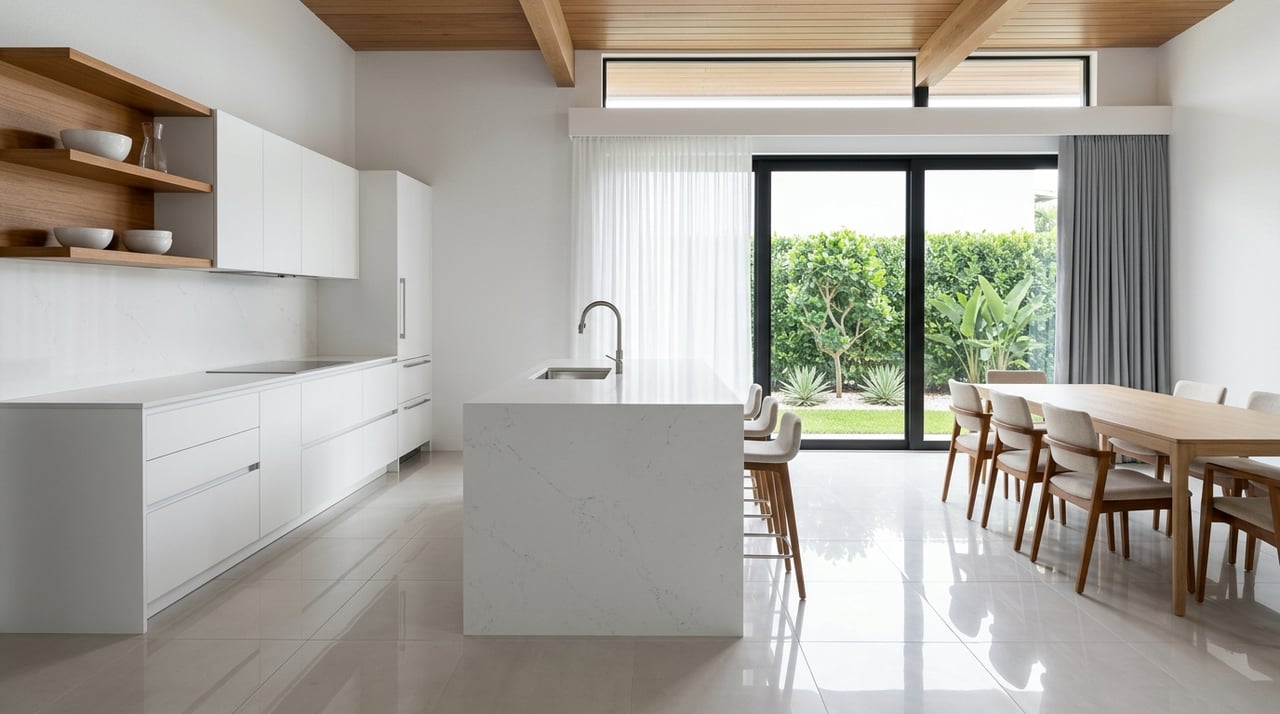
Cap Cana Branded Residences and New Builds Explained
May 7, 2026
May 7, 2026
Are branded residences in Cap Cana worth the premium, or is a traditional new build the smarter move? If you are exploring this market, you are likely weighing more than finishes and floor plans. You are also comparing service, ownership structure, long-term ease, and how each property fits your lifestyle or portfolio. This guide will help you understand how branded residences and new builds work in Cap Cana, what sets them apart, and what to review before you reserve or close. Let’s dive in.
Cap Cana is not simply a place to buy a residence. It is a master-planned destination with more than 6,200 acres, more than three miles of beaches, a protected marina, Punta Espada golf, a bilingual school, and a collection of hotels and dining venues. For you as a buyer, that means the setting itself is part of the value.
Access is another major advantage. Cap Cana reports that it is about 10 minutes from Punta Cana International Airport, and the airport offers direct flights from more than 50 international cities. Punta Cana International Airport also reported more than 11 million passenger movements and 35,092 flights in 2025, placing Cap Cana within one of the Dominican Republic’s strongest travel corridors.
That combination of infrastructure, connectivity, and resort planning helps explain why Cap Cana continues to attract interest from second-home buyers and lifestyle investors. You are not only purchasing a home. You are buying into a managed coastal environment designed around convenience and leisure.
In this market, a branded residence is a private home connected to a hospitality or lifestyle brand and its service standards. These homes are often positioned as turn-key residences in prime locations, especially in resort destinations. In the Caribbean and across the Americas, this model is already well established.
The difference is not just the name on the building. It is the operating model behind it. In many cases, branded residences offer a more structured ownership experience with services and amenities that are designed to feel closer to hotel living than standard condominium ownership.
In Cap Cana, that distinction is easy to see. The Residences at The St. Regis Cap Cana, for example, are presented as private homes with access to private beach areas, spa and dining offerings, pools, and signature St. Regis service. That makes the purchase decision about more than square footage. It becomes a question of how you want to live and how much support you want built into ownership.
Cap Cana’s pipeline is not limited to one format. Recent launches show a broad range of options, from hotel-linked residences to golf-view apartments and amenity-rich towers. That matters because your best fit depends on what you value most.
Current examples include The Residences at The St. Regis Cap Cana, Palm Beach Residences, and Le Ciel Golf & Residences. Palm Beach Residences was announced as a 50-unit tower with more than 17 amenities, while Le Ciel Golf & Residences is a 50-apartment project on the driving range of Las Iguanas Golf with delivery announced toward the end of 2026.
For you, this means the category of “new build” in Cap Cana covers several different ownership experiences. Some projects focus on service and hospitality integration. Others lean into golf access, amenity packages, or resort-style apartment living.
If you are deciding between a branded residence and a non-branded condo or villa, it helps to compare the day-to-day reality of ownership.
A branded residence often appeals to buyers who want consistency and ease. The service model can include hospitality-driven support, standardized maintenance expectations, and access to branded amenities. In a resort setting, that can make ownership feel more seamless, especially if you do not plan to be in residence full time.
For many second-home buyers, the appeal is simple. You can arrive to a more polished, managed environment and spend less time coordinating details yourself. That is a meaningful benefit if convenience and predictability are priorities.
A standalone villa or non-branded condo may offer more room for customization and fewer brand-linked operating rules. You may have more freedom in how the residence is finished, used, or managed. For some buyers, that independence is worth more than the branded service layer.
The tradeoff is that you may not get the same level of built-in support or the same market recognition. If your goal is a highly personalized property experience, a non-branded option may fit better. If your goal is turn-key ownership, the branded route may be more compelling.
Branded residences often command higher pricing than comparable non-branded product. Savills research notes an average global premium of around 30% to 31%, though that varies by location, brand, and project type. Just as important, the research also makes clear that brand alone does not guarantee performance.
That nuance matters in Cap Cana. A strong brand may support desirability, but location within the destination, product design, service delivery, and long-term management still shape value. You should look past the logo and evaluate the full offer.
Branded residences in Cap Cana tend to align most closely with international second-home buyers, lifestyle-driven investors, and buyers who value recognizable service standards. These homes are especially relevant if you want a residence that feels curated and easy to manage.
They may be a strong fit if you prioritize:
If, instead, you want a highly individual home with fewer operating layers, you may find more value in a traditional villa or non-branded condominium. The best choice depends on your lifestyle, not just the marketing label.
In the Dominican Republic, the condominium framework is central to how many new builds are owned. Under the condominium law, distinct parts of a building can be held in exclusive ownership, while the land and common areas remain co-owned and indivisible. The law also allows projects still under construction to be submitted to the condominium regime.
For you, that means the legal structure behind the residence matters as much as the residence itself. Each owner receives a title identifying the exclusive unit and its share in the common areas. When reviewing a new-build opportunity, you should understand both the unit and the condominium regime supporting it.
Closing on a new build in the Dominican Republic is more than a signature ceremony. It is also a tax and registration process that should be coordinated carefully.
According to DGII’s transfer guidance, the process typically requires documents such as:
DGII also states that the transfer tax is 3% of the value of the property. This is one of the most important figures to build into your planning as you evaluate total acquisition cost.
Another practical point for buyers is the IPI, which DGII describes as an annual tax on real-estate wealth for individuals and fideicomisos, subject to the authority’s current thresholds and calculation rules. Because these rules affect carrying costs, they deserve careful review before reservation or closing.
You may also encounter discussions around tourism-related incentives for qualifying projects. ProDominicana notes that tourism and real-estate incentives may include 100% exemptions for income tax, construction permits, land purchase, and certain materials or equipment tied to initial installations and start-up operations. CONFOTUR explains that project classification under Law 158-01 is what opens the door to those incentives.
The key point for you is not to assume every project qualifies. You should verify the project’s current classification and status rather than rely on general marketing language.
If you are purchasing from abroad, there is useful clarity in the Dominican framework. ProDominicana states that foreign and Dominican investors have the same rights and obligations under Dominican investment law, and that no special requirements are needed to invest beyond any sector-specific formalities, licenses, registrations, or permits.
That does not remove the need for careful due diligence. It does, however, support the country’s accessibility for cross-border buyers considering resort residences, second homes, or long-term lifestyle investments in Cap Cana.
Whether you are considering a branded residence or another new build, a focused review can help you make a cleaner decision.
Confirm the condominium regime and title structure. Make sure you understand what is exclusively owned, what is shared, and how common areas are governed.
Check the project’s current permitting and classification status. If incentives are part of the value proposition, confirm whether the project has the relevant classification rather than assuming it will receive it later.
Review the transfer tax, current IPI treatment, and any recurring costs tied to ownership. These items shape your real cost of ownership and should be clear before you move forward.
In a branded residence, review what the operator or brand actually commits to deliver. The value of the brand depends on the real service stack, not just the headline name.
When it comes time to resell, service-rich and well-located branded units may be easier to market than undifferentiated product. Still, resale strength depends on ongoing management quality, design relevance, scarcity, and fit with the buyer pool. Brand can help, but it does not replace fundamentals.
Cap Cana offers a rare mix of resort infrastructure, global connectivity, and evolving new-build inventory. That gives you meaningful choice, but it also means the best purchase is rarely the most obvious one.
If you want convenience, hospitality-driven living, and a highly managed ownership experience, a branded residence may be the right fit. If you value autonomy, flexibility, and a more individualized property path, a non-branded new build may serve you better. In either case, the strongest decisions come from understanding the legal structure, tax path, project status, and actual ownership experience behind the brochure.
In a market as nuanced as Cap Cana, curated guidance matters. For discreet access to branded launches, developer inventory, and senior-led advisory across the Dominican Republic, connect with Christie's International Real Estate Dominican Republic.
Stay up to date on the latest real estate trends.
We pride ourselves in providing personalized solutions that bring our clients closer to their dream properties and enhance their long-term wealth.
Your Dominican Republic Connection
Contact Us
Centro Corporativo Capital Segundo Piso
Calle Altagracia La Romana Dominican Republic 22000